If you are thinking about starting a diecast car collection, two names are almost impossible to miss: Hot Wheels and Matchbox.
Both brands offer small-scale diecast vehicles, both have decades of history, and both have dedicated collectors around the world. But they are not exactly the same. Their vehicle selections, design philosophies, collecting categories, and special releases can appeal to very different types of collectors.
So, if you are buying your first few diecast cars, should you start with Hot Wheels or Matchbox?
The answer depends largely on what you enjoy collecting.
Some collectors are drawn to sports cars, supercars, JDM models, racing cars and imaginative designs. Others prefer realistic everyday vehicles, emergency vehicles, trucks, construction equipment and detailed replicas of cars they see on the road.
This beginner’s guide explains the major differences between the two brands so you can decide where your own collection should begin.
What Are Hot Wheels and Matchbox?
They are two well-known names in the diecast vehicle market, and both are owned by Mattel today.
While they share the same parent company, the two brands have developed distinct identities.
HotWheels is widely associated with performance cars, racing, automotive culture, imaginative designs and a large variety of collector-focused releases.
Matchbox has traditionally emphasized realistic vehicles and everyday transportation. Its range includes cars, trucks, emergency vehicles, construction vehicles, off-road vehicles and other real-world subjects.
Mattel describes its standard Matchbox vehicles as 1:64 scale diecast models with authentic details and castings, including licensed and Matchbox-original vehicles.
That difference in approach is one of the first things a new collector should understand.
Hot Wheels vs Matchbox: What’s the Basic Difference?
At first glance, both brands may look very similar. You can find small cars, trucks and other vehicles from each brand, and many are approximately 1:64 scale.
However, their collections can feel very different.
Hot Wheels
The brand has a strong connection with:
- Sports cars
- Supercars
- Muscle cars
- JDM vehicles
- Racing
- Motorsport
- Modified cars
- Fantasy vehicles
- Pop-culture vehicles
- Collector and special editions
It also has a particularly recognizable collecting culture around special releases and harder-to-find variations.
Matchbox
Matchbox is particularly known for:
- Everyday vehicles
- City cars
- Trucks
- Vans
- Emergency vehicles
- Construction vehicles
- Utility vehicles
- Off-road vehicles
- Classic vehicles
- Realistic replicas
Mattel’s current Matchbox range specifically highlights vehicles such as city cars, off-roaders, rescue and construction trucks, wagons, vans, garbage trucks, and electric and hybrid vehicles.
In simple terms, one collector may look at a display full of performance cars and think, “That’s exactly what I want.”
Another collector may see a realistic fire truck, garbage truck, delivery van and police vehicle and feel the same way.
Neither approach is wrong.
Are Hot Wheels and Matchbox the Same Scale?
One of the most common questions from beginners is whether the two brands are the same size.
Most standard Matchbox vehicles are designed at 1:64 scale, and many comparable diecast vehicles from other brands use the same scale.
However, 1:64 does not mean that every vehicle will have exactly the same physical dimensions.
Think about real vehicles.
A compact hatchback is much smaller than a full-size pickup truck. A city car is smaller than an SUV. A bus is much larger than either.
The same principle applies to scale models.
Therefore, you should not assume that two 1:64 cars must have identical lengths or widths.
For beginners, the important point is that 1:64 refers to the scale relationship between the model and the real vehicle, rather than a fixed physical size for every model.
Which Brand Has More Realistic Cars?
If realism is your biggest priority, Matchbox is worth exploring.
The brand places considerable emphasis on realistic vehicles and authentic details. Its current 1:64 range includes real-world vehicle categories and both licensed and original designs.
This makes Matchbox particularly interesting for collectors who enjoy building realistic displays.
For example, someone interested in creating a miniature city might collect:
- Police cars
- Fire trucks
- Ambulances
- Taxis
- Delivery vans
- Construction vehicles
- Garbage trucks
- Family cars
- SUVs
That doesn’t mean it lacks realistic cars. Far from it.
There are plenty of real licensed vehicles across Hot Wheels collections. The difference is that Hot Wheels also has a strong presence of fantasy and performance-oriented designs.
Which Brand Has More Fantasy Cars?
This is an area where HW has a particularly recognizable identity.
Alongside licensed real-world vehicles, HotWheels has produced many imaginative and fantasy-oriented castings.
These designs can be highly appealing if you enjoy:
- Unusual shapes
- Concept cars
- Extreme designs
- Racing-inspired vehicles
- Hot rods
- Modified cars
- Track-focused vehicles
This is also one reason collecting can be highly personal.
A collector interested exclusively in real-world automobiles may naturally gravitate toward realistic castings.
Someone who enjoys creativity and unusual automotive designs may prefer fantasy models.
HotWheels vs Matchbox: Price Comparison
Price is another important consideration for beginners.
The amount you spend will depend on the country, retailer, collection, release, edition and availability.
Instead of starting with expensive collector pieces, beginners can begin with standard vehicles and gradually learn what they enjoy.
A good starting strategy is to decide on a fixed budget.
For example:
₹500 starter budget
Choose a small number of individual cars that genuinely interest you.
₹1,000 starter budget
You can begin experimenting with different vehicle types and compare the two brands.
₹2,500+ budget
You can explore themed collections, multipacks or selected collector-oriented releases.
The important lesson is simple:
Do not assume that spending more money automatically creates a better collection.
A collection built around vehicles you genuinely like can be much more satisfying than a random collection of expensive models.
Which Brand Is Easier to Find?
Availability can vary significantly depending on where you live.
In India, beginners may encounter diecast cars through:
- Toy stores
- Department stores
- Supermarkets
- Online marketplaces
- Collector communities
- Specialty diecast retailers
- Local hobby stores
Availability also changes over time.
A particular model might be easy to find when first released and considerably harder to locate later.
This is especially important for collectors because the car you want may not necessarily be available whenever you decide to buy it.
If you see something you like at a reasonable retail price, checking the model details and condition before purchasing can be more useful than simply waiting for a “better” release.
Hot Wheels Special Releases and Treasure Hunts
One reason many beginners become interested in HotWheels collecting is the existence of special and harder-to-find variations.
Two terms you will encounter frequently are Treasure Hunt (TH) and Super Treasure Hunt (STH).
These are not simply different names for ordinary cars.
Mattel’s own Super Treasure Hunt releases have included enhanced versions featuring features such as Spectraflame paint and Real Riders wheels.
The important thing for beginners is to learn the terminology before paying collector-market prices.
A car being described as “rare” by a seller does not automatically mean it is rare or valuable.
Always check:
- The exact model
- Series
- Number
- Variation
- Wheels
- Paint
- Packaging
- Condition
- Current market demand
This can prevent expensive beginner mistakes.
Does Matchbox Have Special or Collector Models?
Yes.
Matchbox isn’t limited to basic toy vehicles.
The brand also offers collector-oriented products and premium vehicles.
For example, Mattel’s Matchbox Premium Collector vehicles are 1:64 scale and can include features such as True Grip tires, premium decoration and opening doors, hoods or trunks on some models.
Matchbox also offers themed multipacks. Some current 5-packs contain a mixture of licensed and Matchbox-original vehicles, while certain sets can include a vehicle exclusive to that particular pack.
This means beginners shouldn’t think of the choice as:
Hot Wheels = collectors
and
Matchbox = kids’ toys
The reality is more nuanced.
Both brands have products that can appeal to children, casual buyers and serious collectors.
Which Brand Has Better Details?
This is difficult to answer with a single winner because detail varies from model to model.
When comparing two individual vehicles, look at:
Paint
Check how cleanly the paint has been applied and whether the colors suit the vehicle.
Decoration
Look at stripes, logos, racing graphics, headlights, taillights and other printed details.
Wheels
Wheels can significantly change the appearance of a model.
Interior
Look through the windows and check the dashboard, seats and interior colors where visible.
Base
Collectors often pay attention to the base because it can contain information about the model, manufacturing location and copyright details.
Moving parts
Some premium or collector-focused vehicles may have opening doors, hoods or trunks. Matchbox Premium Collector models, for example, include such features on selected vehicles.
Instead of asking which entire brand has better detail, compare the specific models you are considering.
Which Brand Is Better for Car Enthusiasts?
Your automotive interests can make the decision much easier.
If you love supercars
Explore both brands, but pay particular attention to performance-oriented HotWheels releases.
If you love JDM cars
HW can be particularly interesting because of its strong representation of Japanese automotive culture.
If you love American muscle
Both brands offer possibilities, with HotWheels providing many performance-oriented choices.
If you love European cars
Look at individual releases from both brands rather than choosing solely by brand.
If you love trucks and utility vehicles
Matchbox can be especially interesting because of its broad range of realistic trucks, service vehicles and everyday transportation.
If you love emergency vehicles
Matchbox’s realistic vehicle range can be a natural fit.
If you love fantasy designs
HotWheels is likely to offer more of the type of imaginative designs you may enjoy.
The best approach is to let your automotive interests determine your collection, rather than letting the brand determine what you are supposed to collect.
Which Is Better for Kids?
Both brands can work well for children, depending on the type of play they enjoy.
Matchbox emphasizes realistic vehicles and imaginative play, while HW has a strong connection with racing, stunts and track-based play.
Mattel currently describes Matchbox vehicles as suitable for children and collectors, with its standard 1:64 products recommended for ages 3 and up.
For a child who loves:
- Realistic cars
- Trucks
- Police vehicles
- Fire engines
- Construction vehicles
Matchbox may be particularly appealing.
For a child who loves:
- Racing
- Loops
- Stunts
- Speed
- Track play
- Fantasy cars
HW may be more appealing.
Which Is Better for Adult Collectors?
Adult collectors can enjoy either brand.
The important question is what you want your collection to represent.
A Hot Wheels collection might be organized around:
- Supercars
- JDM
- Muscle cars
- Racing
- Movie cars
- Treasure Hunts
- Specific castings
- Specific series
A Matchbox collection might focus on:
- Realistic everyday vehicles
- Emergency vehicles
- Commercial vehicles
- Construction equipment
- Classic cars
- Specific manufacturers
- City and diorama displays
There is no universal collecting formula.
Your collection can be based on whatever makes you want to keep searching for the next model.
How Should a Beginner Start Collecting?
This is probably the most important section for anyone new to diecast collecting.
1. Start With a Theme
Don’t feel that you need to buy every car you see.
Choose something that interests you.
For example:
JDM collection
or
Porsche collection
or
Supercar collection
or
Emergency vehicle collection
or
Classic American cars
Having a theme can make your collection feel intentional.
2. Set a Budget
Decide how much you are comfortable spending every month.
You don’t need hundreds of cars to become a collector.
Even a collection of 10 carefully selected vehicles can have more meaning than a collection of 100 random purchases.
3. Learn the Basics
Before buying expensive models, learn about:
- Mainline/basic releases
- Premium releases
- Special editions
- Variations
- Packaging
- Model numbers
- Casting numbers
- Condition
- Market prices
The more you learn, the easier it becomes to identify what you actually want.
4. Don’t Chase Rarity Immediately
One of the biggest mistakes beginners make is assuming that the rarest car must be the best car to buy.
Rarity is only one factor.
A collectible’s desirability can also depend on:
- Model popularity
- Condition
- Demand
- Design
- Production quantity
- Availability
- Collector interest
A rare model that nobody wants may not be as desirable as a widely recognized model that many collectors actively seek.
How to Identify a Potentially Valuable Diecast Car
If you are interested in the collecting or resale side of diecast cars, learn to evaluate the vehicle rather than relying on labels.
Look at:
1. Rarity
How difficult is the exact variation to find?
2. Condition
Is the car free from scratches, chips and manufacturing defects?
3. Packaging
For carded collectors, the condition of the card and blister can make a significant difference.
4. Popularity
Is the vehicle itself desirable?
5. Special Features
Does it have a special paint finish, wheels, variation or collector designation?
6. Market Demand
What are collectors actually paying for the model?
Most importantly, never assume that a high asking price equals a high market value.
Look for completed sales or credible market evidence where possible.
Common Mistakes New Diecast Collectors Make
Starting a collection is exciting, but there are several mistakes worth avoiding.
Buying Everything
You don’t need every car.
Buy the models that fit your interests.
Buying Because Someone Says It’s Rare
Always verify the claim.
Overpaying
Compare multiple listings before purchasing an expensive model.
Ignoring Condition
A damaged card or chipped car can matter significantly to collectors.
Focusing Only on Future Value
Collecting should not depend entirely on whether a car will become more expensive.
Market demand can change, and there is no guarantee that a particular diecast model will appreciate.
Not Learning the Basics
A few hours of research can save you from making costly purchases.
Should You Collect Hot Wheels and Matchbox Together?
Absolutely.
You don’t have to choose only one.
In fact, collecting both can give you access to very different types of vehicles.
You might have a display containing:
- A Hot Wheels Porsche
- A Matchbox emergency vehicle
- A Hot Wheels JDM model
- A Matchbox construction truck
- A Hot Wheels muscle car
- A Matchbox classic car
Because both brands operate heavily around the 1:64 format, they can work well together in a broader diecast collection.
The important thing is to create a collection that reflects your interests, not someone else’s definition of a serious collector.
Hot Wheels vs Matchbox: Which Should a Beginner Choose?
Instead of asking which brand is universally better, ask:
What kind of diecast cars do I actually enjoy?
Choose HW if you are particularly interested in:
- Performance cars
- Racing
- JDM
- Supercars
- Muscle cars
- Fantasy designs
- Stunt and track culture
- Special and chase-style collecting
Explore Matchbox if you are particularly interested in:
- Realistic vehicles
- Everyday cars
- Trucks
- Emergency vehicles
- Construction vehicles
- Utility vehicles
- Real-world scenes
- Dioramas and realistic displays
And if you like both styles, there is absolutely no reason to restrict yourself to one brand.
Beginner Diecast Buying Checklist
Before purchasing your first car, ask yourself:
□ Do I actually like this vehicle?
□ Does it fit my collection theme?
□ Is the price reasonable?
□ Is the car in good condition?
□ Is the packaging important to me?
□ Have I checked the exact model and variation?
□ Am I buying it because I like it—or because someone called it “rare”?
□ Would I still want this car if I knew its value would never increase?
That final question can be surprisingly useful.
If the answer is yes, you’re probably buying for the right reason.
Final Thoughts
Starting a diecast collection doesn’t have to be complicated.
Hot Wheels and Matchbox offer different collecting experiences, and both can be excellent starting points for a beginner.
If you enjoy performance cars, racing, JDM, supercars and imaginative designs, explore HW.
If realistic vehicles, trucks, emergency vehicles and everyday transportation appeal to you, explore Matchbox.
And if you can’t decide, start with both.
Buy a few cars from each, compare them in person and pay attention to which models make you want to keep collecting.
That’s ultimately what makes a collection personal.
You don’t need the biggest collection.
You need a collection that you enjoy looking at.
Frequently Asked Questions
Is Matchbox better than Hot Wheels?
Neither brand is universally better. They have different design approaches and vehicle selections. Your preference for realistic vehicles, performance cars, fantasy designs, trucks or other categories should guide your choice.
Are Matchbox and Hot Wheels the same size?
Both commonly use the 1:64 scale for many vehicles, but individual models can have different physical dimensions because real vehicles themselves vary in size. Matchbox officially describes its standard vehicles as 1:64 scale.
Are Matchbox cars worth collecting?
Yes. Matchbox offers a wide range of realistic vehicles, licensed models, themed packs and collector-focused products.
Are Hot Wheels cars worth collecting?
They can be, particularly if you enjoy the brand’s vehicle designs, automotive themes, special releases and collecting culture. However, not every model should be viewed as an investment.
Which has more realistic cars?
Matchbox has a particularly strong emphasis on realistic everyday vehicles and authentic real-world designs.
Which should a beginner collect first?
Start with the brand whose vehicles match your interests. You can also buy a few examples from both and decide which collecting style you enjoy more.
Can you collect Hot Wheels and Matchbox together?
Yes. Both brands can comfortably form part of the same 1:64 diecast collection.
Are rare diecast cars always valuable?
No. Rarity is only one factor. Condition, model popularity, collector demand, availability and market activity can all affect desirability and price.
Start Your Diecast Collection
Whether you prefer realistic Matchbox vehicles, performance-focused Hot Wheels models, or a combination of both, the best collection is one built around vehicles you genuinely enjoy.
Explore different models, learn how the hobby works, set a budget and let your collection develop naturally.
Follow Us On:
Recently Added:
-
Dracule Mihawk OP09-048 SR Japanese – One Piece TCG
Original price was: ₹597.00.₹397.00Current price is: ₹397.00. -
Harry Kane LE 28 Fired Up! Limited Edition – Topps Match Attax 2025/26
Original price was: ₹2,100.00.₹1,297.00Current price is: ₹1,297.00. -
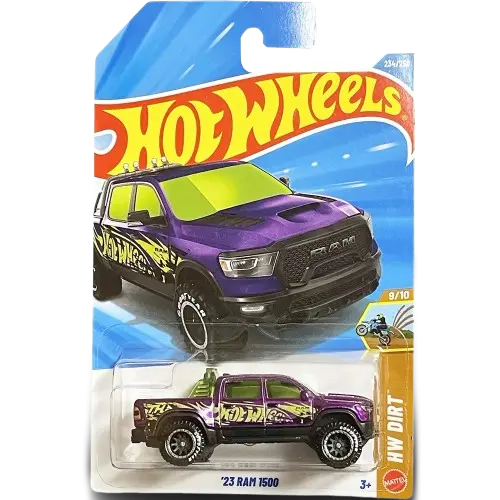
Hot Wheels ’23 Ram 1500 STH #234/250 – Super Treasure Hunt (With Protector)
Original price was: ₹6,997.00.₹5,997.00Current price is: ₹5,997.00. -
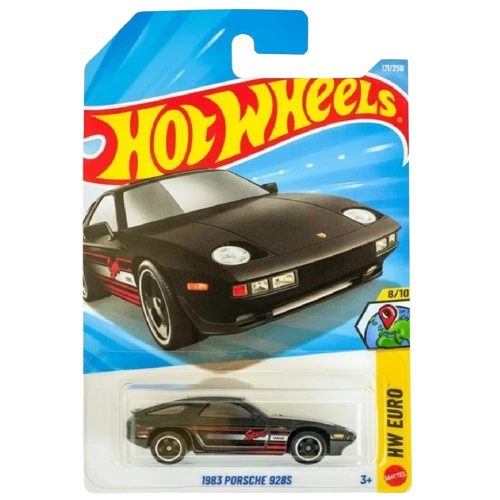
Hot Wheels 1983 Porsche 928S #171/250 – HW Euro 8/10 Black 2026
Original price was: ₹399.00.₹299.00Current price is: ₹299.00.